Coping with Grief at Christmas
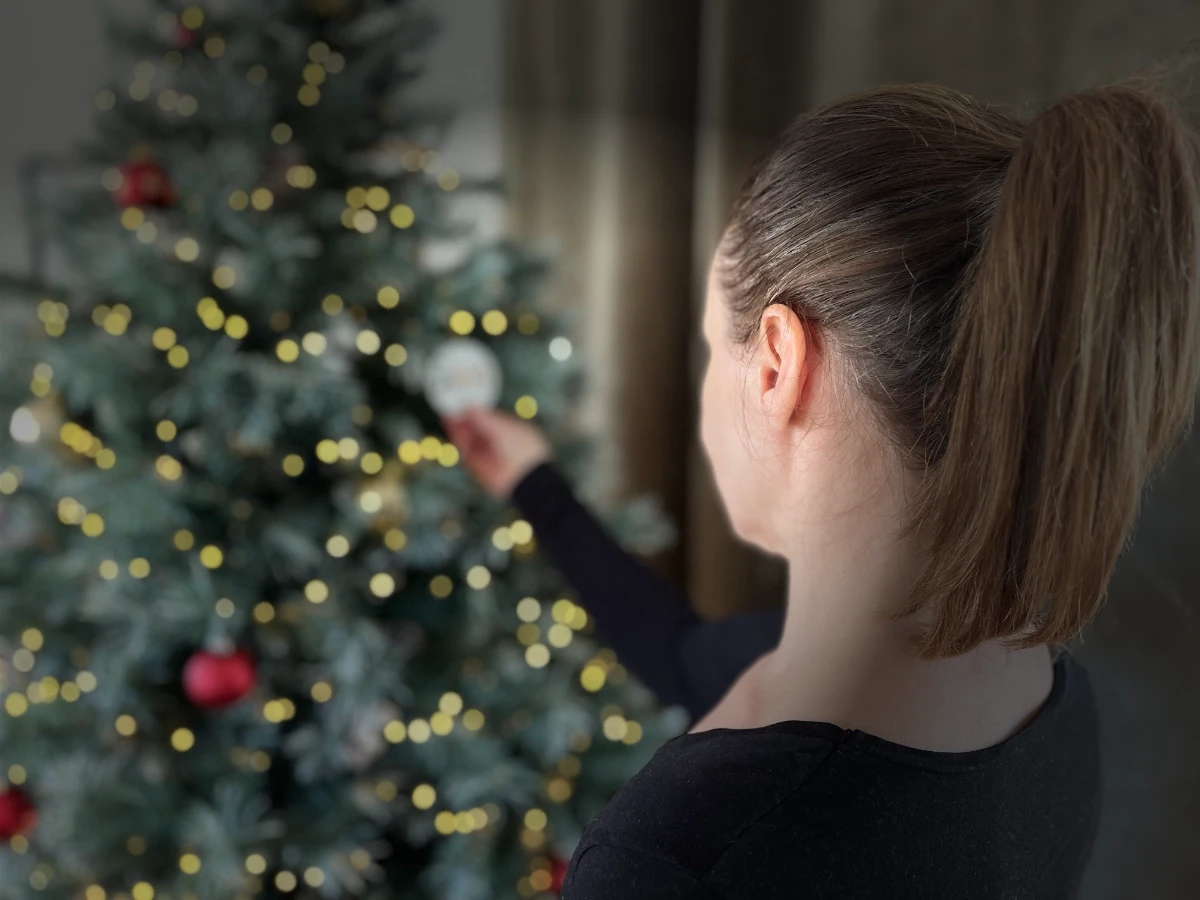
As a retired death service professional, I am well acquainted with the depth of feeling that the festive season can invoke. A loss at this time of year cuts quite differently, it can often feel sharper and deeper.
When someone we love has died, particularly around Christmas, the obligation to be happy and joyous can feel rather unbearable. The streets glow with lights, shops pulse with rousing Christmas tunes, laughter spills from doorways, but for those suffering loss something feels dimmed and saturated in paradox. It can feel as though the world is celebrating a life that we can no longer recognise.
I lost my dad at this time of year, his funeral was a Christmas one, holly and ivy, winter greenery adorned his coffin, and ever since then, this season has carried a double weight. Grief doesn’t fade simply because time passes, it changes shape, it deepens to find a home somewhere unknowable within us, and even when we consider those feelings to be anchored down, they can resurface in unexpected ways. Yuletide and Christmas have an uncanny way of snapping the tethers that we assumed held everything down and in place.
There is something inarticulately cruel about grief at Yuletide, not because joy is wrong, but because grief can make joy feel like something distant and alien. When you are mourning, festivity and joviality can feel like a language that you no longer speak or fully understand. It can leave one feeling unseen and standing outside the currents of festivity, where you carry a quiet sorrow in a world that seems absolutely oblivious to your pain. That pain might feel like an imposition, a dampener on the joy of others.
But how about this for a thought? This is where the deeper truth of the season lives. For you see, Yuletide and the Christmas season was never meant to deny darkness, it was born because of it.
A flame in the darkness
This is the dead time of the year, the old sun has fallen to stand still on the horizon, the land itself sleeps the long sleep of waiting. Our ancestors gathered to celebrate not because things were easy, but because they were hard; life was tough. They lit fires not to pretend the dark wasn’t there, but to survive it together. The twinkling lights were acts of defiance, the feasting an act of communal affirmation. Their actions, and to an extent our own actions even in the secular world, reflects a deeper longing for hope. But often hope is not loud and nor is it cheerful - hope can be quiet, it can be stubborn, and sometimes hope is lighting a flame when your own light feels faint and weak.
Grief can easily dampen our inner fire; love does that, for the price we pay for loving deeply is enduring the pain of loss. That isn’t an abstract idea, it is carved into the body and mind, spirit and soul by countless generations before us. But perhaps what winter and its festivals teach us is that a flame does not need to be large to endure, it needs only to be protected and tended.
When we can’t feel joy ourselves or struggle to put on the countenance of joy, we can still tend to the conditions for it to return. When our own light feels like it’s on the verge of being snuffed out, we can sit beside the light of others. When celebration feels like an impossible task, don’t punish yourself, for sometimes presence is quite enough. And slowly at first, like the movement of the sun at Midwinter, almost imperceptibly, the light begins to come back.
The solstice does not banish winter, it simply turns the wheel. The days lengthen by seconds at first, too small for the naked eye to notice, but they do nonetheless lengthen. Life doesn’t rush back, it waits patiently, it gathers itself and trusts in the cycle. In many ways grief reflects this mystery.
For those grieving this festive season, know that you don’t have to feel joyful and jolly to honour the light. You don’t have to be OK to feel that you belong amidst the fairy lights and endless mince pies, you don’t have to be healed to be held.
If you are carrying loss this season, like so many do, especially if it feels heavier because of the noise and frivolity around you, know that you are not failing at Christmas, you are in fact living its deepest truth. You are standing at the place where love and loss meet, where darkness is quite real, and where light is chosen anyway. That choice to keep going, to remember and to love still and yet suffer its agonies is no small act, it is not an imposition. The light, your light will return, not all at once with pomp and ceremony, but faithfully, as it always has.
Until then, you do not walk alone, millions stand alongside you in the great juggling act of holding pain, loss and memory with the perplexion of celebration. All we can do is to remain open to life, even when it hurts. We may at times not consider that grief is sacred, but grief is sacred because love is sacred, and this season and its accoutrements exist to remind us of both.
Yours in the stillness betwixt and between death, rebirth and life.
Kristoffer.



A new story is unfolding.